
Examining the Influence of Landscape on the Health and Well-being of Residents and Staff in Long-term Care Homes
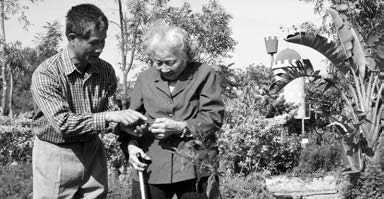
image: Peggy Chi
In 2015, Ontario announced a 10-year plan to redevelop 300 long-term care homes – almost half of the current total – thus, creating an opportunity to integrate landscape to promote health and well-being (health). This proposal seeks is to examine the relationships between the landscape characteristics and the health outcomes of residents (living with and without dementia) and nursing staff. The theory is that high quality landscape positively contributes to resident and staff health. The proposed methodology combines quantitative and qualitative approaches in two phases.
Phase 1 proposes an iterative group communication process (a Delphi panel) with experts, pilot sites, and a focus group to develop surveys for collecting data on the overall landscape characteristics of the homes and on the health of nursing staff. The developed survey for the overall landscape characteristics will assist in research site selection. In the selected homes, a collection of photographs, sketches and field notes will be quantified and analyzed to understand the spectrum of characteristics. Phase 2 entails collecting data on nursing staff’s health using the developed survey, and resident’s health using Canadian Institute for Health Information’s Metadata. This mixed-method approach will examine for significant associations between landscape and health to build onto existing literature, offer future research directions, and inform the imminent redevelopments.
The project deliverables include research findings to be communicated through two peer-reviewed publications in the Health Services Research Journal and the Health Environments Research & Design Journal, as well as presentations at conferences.