
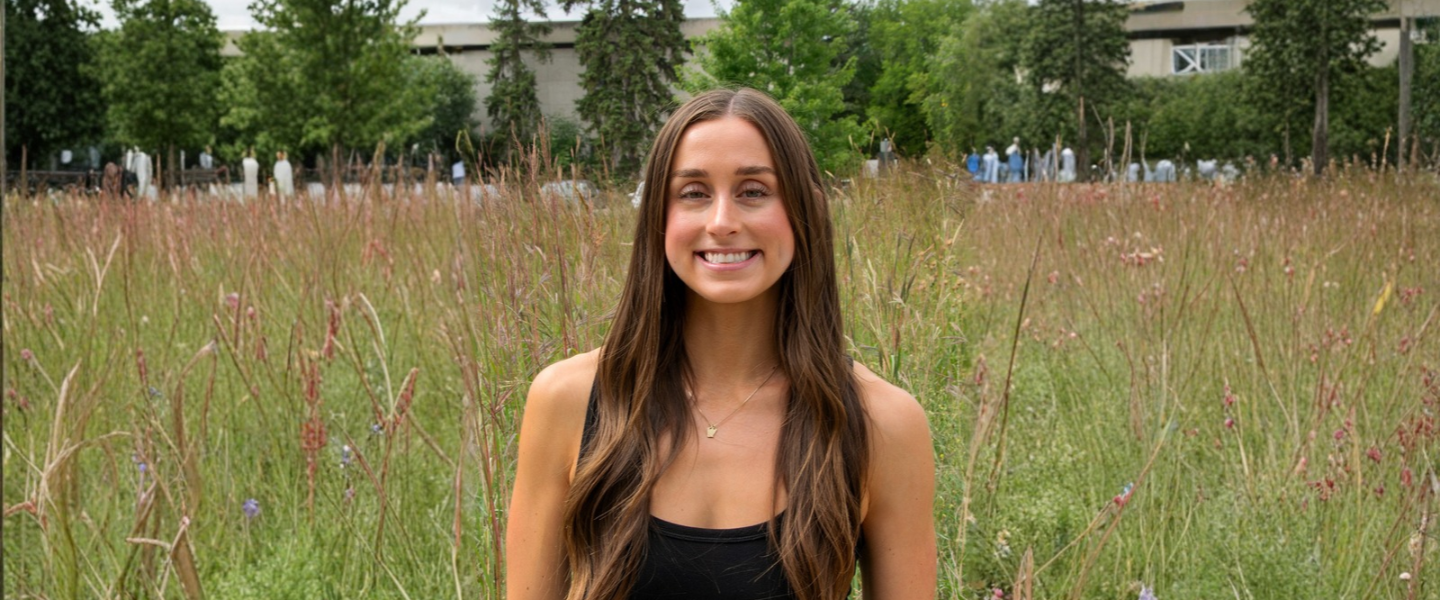
LACF Congratulates Paige Michaelyshen
About Paige
Paige Michalyshen is a Master of Landscape Architecture student at the University of Manitoba whose research explores how the forests, water, and ecologies can support mental, spiritual, cultural, and physical wellness. Having grown up spending much of her time in Kenora, Ontario, she is completing her practicum on Treaty 3 territory. Paige is collaborating with a community to develop a trail system that tells a story, connects significant places, and marks a healing forest. Paige pays close attention to the land and the people who live with it, and she leads her design process with listening first. She holds a Bachelor of Environmental Design in Landscape + Urbanism and is a recipient of the SSHRC Canada Graduate Research Scholarship and the University of Manitoba Graduate Fellowship. She is President of the Landscape Architecture Student Association (LASA) and a former co-editor of Warehouse Journal Volume 33.
Student Statement
Growing up with Kenora as a second home, I learned landscape through my body before I had words for it. I swam in its lakes, spent time in the boreal forest, and learned about the animals and plants that share the land. That early relationship with place is the root of my interest in natural systems, and it led me to landscape architecture. This profession combines land stewardship with creative design. Walter Kehm described landscape architecture as the study of how people can coexist with the natural world. That idea has guided my education and sits at the centre of my practicum.
Returning to Kenora as a designer for my practicum, I am collaborating with Makate Waagamichiwanang Gakinaa’amaatiwin Youth and Family Wellness Camp on Treaty 3 territory. Together, we are developing a trail system across the land that tells a story, connects significant areas, and marks the place of a healing forest. My research explores how forests, water, and ecologies can support mental, spiritual, cultural, and physical wellness. This work allows me to observe the land closely: how water moves through it, how the forest grows and changes, and how people experience both. It also asks me to see that the health of the land and the health of the people who live with it are connected. I am an avid trail runner. The trails are where I think most clearly, push myself, and where much of my creativity, leadership, and curiosity about ecology take shape.
I understand creativity as the ability to listen and offer something in return, such as an idea, a drawing, or a conversation. For my practicum, listening and learning from the community is one of the most fulfilling parts of my work as a designer. The trail is not only a path, but also a way to tell the place's story and make a healing forest recognizable to visitors. I have also developed my creative thinking as a co-editor of Warehouse Journal Volume 33 in 2024.
My leadership extends beyond design and community engagement. As President of the Landscape Architecture Student Association (LASA), I support and represent my peers. I also serve as a Teaching Assistant at both the undergraduate and graduate levels, where I find joy in helping other designers and students grow. Whether running, doing practicum research, or engaged in student government, my philosophy remains the same. To lead by example. I hope to leave each place and each person a little better for having worked together.
This scholarship would let me focus on what matters most: my research, my studies, and the community engagement that shapes both. Pursuing a master’s degree bring financial pressure, and it's greater because I travel regularly between the University of Manitoba and Kenora for site visits and community meetings. The Walter H. Kehm Scholarship would ease this burden, enabling me to spend more time on the land and in conversation with the people I am designing with, rather than rushing the relationships that make this work so meaningful.
Mr Kehm hoped recipients would contribute to society’s happiness and health and would continue to educate and inform people about living in harmony with nature. I share that hope. My practicum is rooted in a place I love, developed in partnership with the people who care for it, and focused on how the natural world can support healing. I intend to keep designing this way: listening first, respecting ecological systems, and aiming to make the land and the world a better place for everyone who lives with it. Thank you to the Walter H. Kehm National Scholarship and the Landscape Architecture Canada Foundation for this opportunity and support.